
Emergency Troubleshooting: Diagnosing 8 Critical Failures in Primary Jaw Crusher Operations
Emergency Troubleshooting: Diagnosing 8 Critical Failures in Primary Jaw Crusher Operations
While a high-performance primary jaw crusher is globally trusted for its excellent reduction ratios and robust engineering, prolonged high-load operations in punishing quarry environments will inevitably cause mechanical wear. When an unexpected breakdown occurs at the primary station, it does not just halt a single machine—it interrupts the downstream conveyor feed, limiting secondary cone crushers and impacting overall plant productivity.
For equipment managers and site mechanics, mastering rapid failure diagnosis and preventive maintenance is highly essential. Based on direct engineering field data, this technical emergency brief breaks down the 8 most frequent jaw crusher operational faults, their root causes, and factory-certified solutions to accelerate your production recovery.
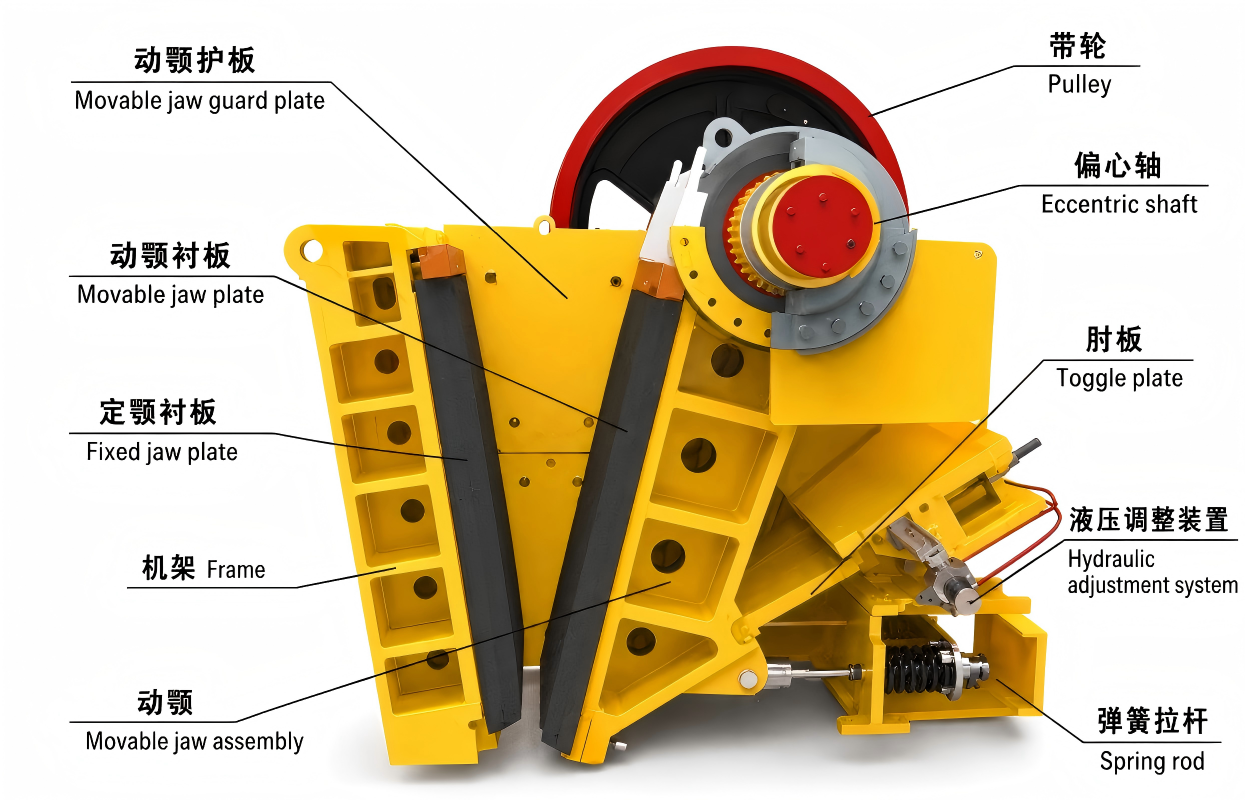
The 8 Critical Operational Faults & Engineering Solutions
1. Intense Cracking Sound Followed by Swing Jaw Stall (Tension Spring Failure)
Root Cause:
The heavy-duty tension spring or the tension rod has suffered a fatigue fracture. Alternatively, uncrushable tramp metal has invaded the cavity, forcing the toggle plate to slip out of its seat or fracture under excessive stress.
Engineering Solution:
Instantly isolate the power supply and perform lockout/tagout (LOTO). Replace the fractured tension spring or rod. If the toggle plate is dislodged or damaged, loosen the tension rod nut, remove the remaining spring stack, safely hoist the moving swing jaw, and re-seat or replace the toggle plate with certified factory parts.
2. Cavity Jamming Paired with Main Motor Amperage Spikes
Root Cause:
Oversized boulders have wedged tightly in the upper feed throat without completely blocking it, or the discharge belt conveyor downstream has faced issues, causing crushed aggregate to back up into the closed-side setting (CSS). Excessive moisture or clay contamination can also trigger material compaction under high-volume feeding.
Engineering Solution:
For rock jams, stop feeding, secure the boulder with a heavy steel wire rope, and utilize a crane or hoist to remove it from the chamber. If the downstream conveyor is faulty, stop the feed immediately to clear the conveyor bottleneck; keep the crusher idling if possible to prevent material from compacting tightly inside the chamber. Clean the discharge gate and slow down your automated vibrating feeder to regulate volume.
3. Intense Shaking and Metallic Hammering Between Jaw Dies
Root Cause:
The heavy wedge-bolts securing either the moving jaw die or the fixed jaw die have loosened, backed out, or snapped under continuous impact.
Engineering Solution:
Retighten or fully replace the broken jaw die fastening bolts. If the anti-loose spring washers have lost their elastic memory due to fatigue, replace them immediately. Recalibrate the discharge opening to verify proper structural clearance between both manganese plates.
4. Output Adjustment Failure or Adjustment Wedge Fractures
Root Cause:
The horizontal forward travel of the dynamic adjustment wedge block has exceeded its mechanical limit. This often occurs when using non-standard, custom-made toggle plates that violate original factory geometry, or when the adjustment seat anchor bolts loosen under severe vibration.
Engineering Solution:
Retract the wedge block fully. Replace the worn components and ensure you reinstall original factory-spec toggle plates and toggle seats. Securely tighten all adjustment frame structural bolts and inspect the seat casting for stress-induced weld defects.
5. Structural Cracking of the Moving Swing Jaw Body
Root Cause:
Chronic operation under extreme material overload, sub-surface casting porosity defects, or using uncertified toggle plates that fail to break automatically during a tramp iron emergency. It can also be caused by lateral jaw displacement hitting the side liners, operating with a failed tension spring, or a material feed hopper angle that is too steep, causing stones to slam directly into the swing jaw head.
Engineering Solution:
Depending on the severity of the damage, the swing jaw may require professional repair or complete replacement. To minimize recurrence risks, eliminate oversized feed boulders and enforce strict tramp iron protection. Ensure that only certified, calibrated toggle plates are used as safety shear pins. Readjust the eccentric shaft alignment, replace dead tension springs, and optimize the feed hopper configuration to ensure a centered, uniform, and cushioned material flow.
6. Bending or Structural Fracture of the Forged Eccentric Shaft
Root Cause:
Side-tipping or severe impact during initial equipment crane rigging, processing materials beyond the crusher's designed compressive strength range, or long-term unmonitored overloading. It is also caused by non-standard toggle plates failing to break during an uncrushable metal event, or improper original heat treatment creating internal stress concentrations.
Engineering Solution:
Replace the eccentric shaft completely. Ensure proper crane rigging protocols are used during installation. Verify that your rock characteristics align with the machine's technical specifications. Always use qualified toggle components designed to shear before the shaft deforms.
7. Frequent Toggle Plate Structural Fractures
Root Cause:
Continuous overloading from over-sized blast rock, regular entry of uncrushable tramp iron, or misalignment where the toggle plate sits unparallel or twisted inside the toggle matrix.
Engineering Solution:
Replace the toggle plate and strictly regulate maximum feed dimension limits. Implement magnetic separators on upstream feeds to capture tramp metal. Inspect and replace worn toggle seats (grooves), ensuring absolute parallel alignment during reassembly.
8. Spontaneous Machine Stalls Under Load
Root Cause:
Material blockage at the discharge gate causing a full-cavity backup. Alternatively, the drive V-belts have slacked and are slipping under load, the eccentric shaft adapter sleeve has loosened causing zero bearing clearance, the job site voltage has dropped below operational limits during peak hours, or an internal roller bearing has faced performance issues due to lubrication failure.
Engineering Solution:
Manually clear all compacted material from the discharge zone to restore open material flow. Tighten or replace the drive V-belts. Readjust and lock the eccentric bearing adapter sleeve. Verify that your site power grid matches the rated voltage under peak load, and inspect or replace damaged bearings while flushing the thin oil circuit.
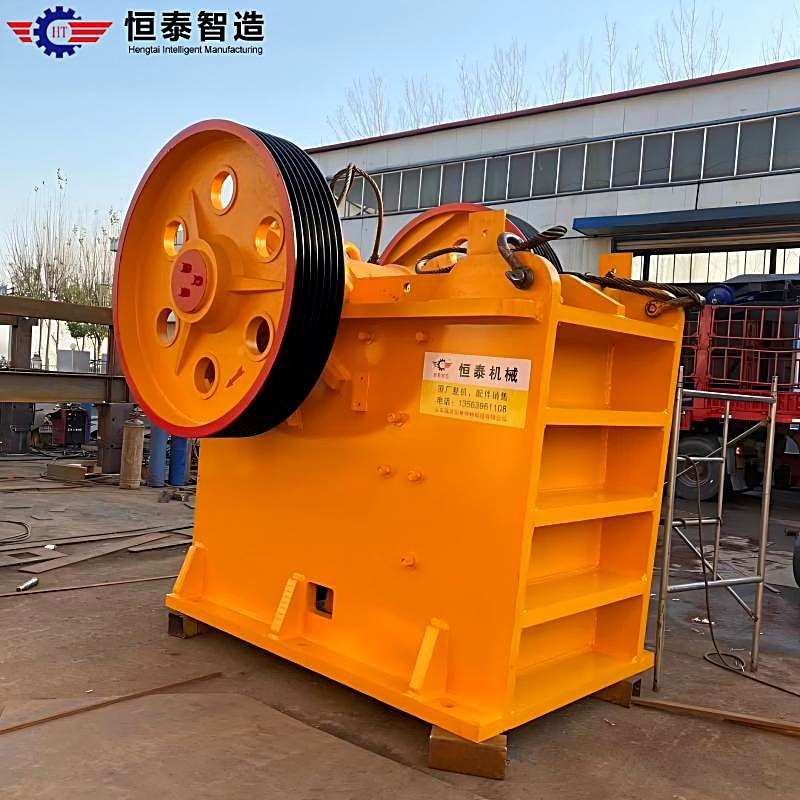
Proactive Maintenance: The Path to Stable Operation
Demanding mining operations require maximum equipment reliability. Maintaining an accurate digital log of bolt torques, monitoring bearing temperature anomalies, and tracking the wear profile of your manganese steel liners are the core pillars of modern plant management. Implementing these precise preventive steps significantly improves the asset utilization of your entire primary crushing line and extends the operational lifecycle of your machinery.
To see how this preventive troubleshooting framework pairs with European-type chamber selections and deep V-cavity engineering, read our complete primary stage guide:
Direct Corporate Contact Information
Official Business Email
Corporate Website
Instant WhatsApp Communication
+86 18288664797